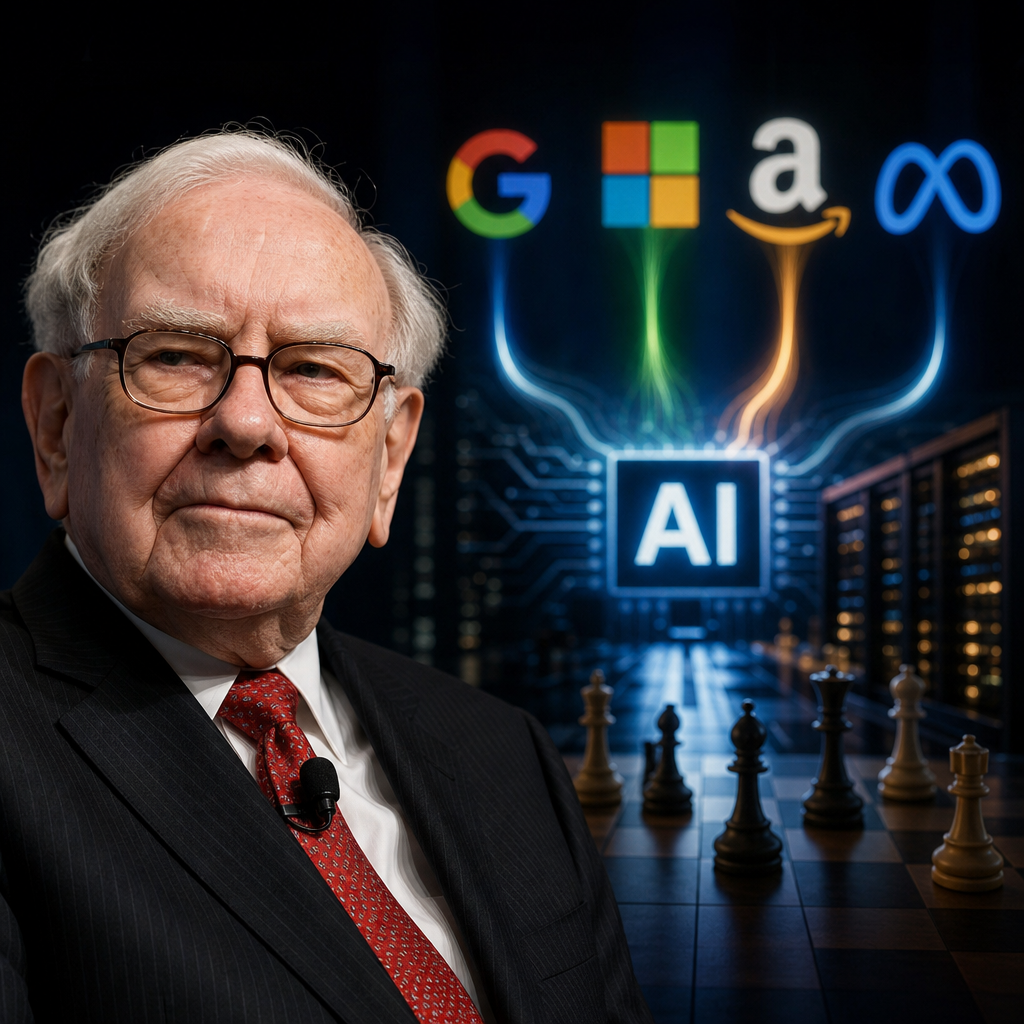
Warren Buffett’s Take on the AI Race: Unexpected Insights from a Veteran Investor
Warren Buffett, the Oracle of Omaha, is renowned for his sage advice and shrewd investment decisions. Known for focusing on long-term value instead of chasing the latest trends, Buffett’s opinions carry weight for investors and tech enthusiasts alike.
When he speaks about artificial intelligence, a field characterized by rapid innovation and fierce competition, his cautionary remarks signal a moment of reflection in an industry often driven by speed and spectacle. ‘Playing a game they don’t want to play,’ he says, referring to AI companies and their relentless pursuit of dominance in the technological race.

The Reluctant Race in AI
Buffett’s metaphorical game suggests that AI companies are pressured into a competition that strays from their core missions. In the quest for supremacy, they risk prioritizing speed over safety, and hype over substance.
Often, the fear of lagging behind rivals forces companies to ignore measured innovation, opting instead for more flamboyant displays of technological prowess that may not always align with the foundational goals of AI – to enhance human endeavors meaningfully.
The Potential Pitfalls of Rushing Innovation
- Over-Promise and Under-Deliver: Companies caught in the race may promise groundbreaking AI capabilities, which, when unfulfilled, can erode trust.
- Ignored Ethical Considerations: Swift developments risk bypassing important ethical discussions, potentially compromising user safety and privacy.
- Focus Shift from Core Values: Businesses may shift their focus from user-centric innovations to short-term gains, undermining their original objectives.
A Game More Than Just Business
Artificial Intelligence, by its nature, influences far beyond business metrics. AI affects societal norms, privacy paradigms, and human interactions. As giants like Google and Amazon push to seize market share, they operate in an arena where the stakes transcend financial returns.
Buffett’s analogy implies the risk of ‘non-economic’ values being sidelined. Decisions made under competitive pressure may fail to honor the ethical responsibilities inherent in wielding such transformative technology.
Balancing Innovation with Responsibility
- Stakeholder Engagement: Involving diverse stakeholders including ethicists and consumers in AI development can ensure technology serves collective human interests.
- Long-Term Impact Evaluation: Regular assessment of AI technologies’ long-term impact can lead to more sustainable and responsible AI advancements.
- Transparent Practices: Open lines of communication about AI capabilities and intentions can foster trust and curb skepticism.
| Consideration | Risk Level | Mitigation Strategy |
|---|---|---|
| Pace of Innovation | High | Prioritize safety and ethics; develop systemic evaluation standards. |
| Public Trust | Medium | Maintain transparency and engage in public discourse about AI developments. |
| Corporate Focus | Medium | Align business strategies with core values and stakeholder needs. |