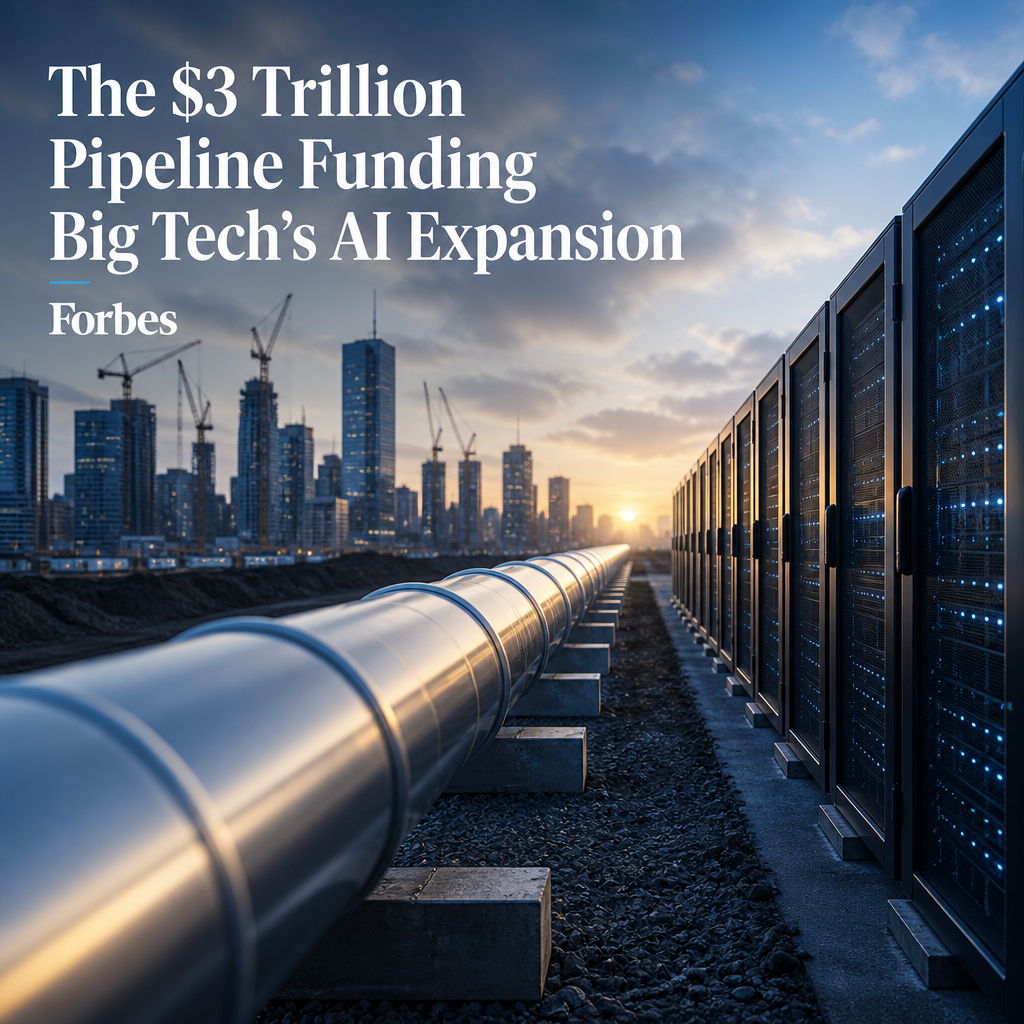
The Financial Powerhouse Behind AI: Big Tech’s $3 Trillion Pipeline
The race to dominate artificial intelligence is heating up, and it’s fueled by a staggering $3 trillion financial pipeline. In the corridors of Silicon Valley, tech giants like Google, Amazon, and Microsoft are leveraging this massive fund to steer the next wave of technological innovations. But what does this colossal sum mean for the future of AI, and how exactly are these funds being channeled?
As we delve deeper into this intricate web of investments, it’s crucial to understand the key players and strategies that are guiding the allocation of these resources. With the stakes so high, the impact of this funding on AI advancements and our daily lives cannot be overstated.

The Heavyweights of AI Investment
Standing at the forefront of the AI revolution are the usual suspects: Google, Amazon, and Microsoft. These companies are not just splurging on AI for the sake of innovation but are strategically aligning their financial resources to create groundbreaking solutions that redefine industries.
- Google: With a significant portion of its budget dedicated to AI, Google is pushing the boundaries of machine learning and natural language processing.
- Amazon: Venturing beyond e-commerce, Amazon is utilizing its vast resources to enhance AI solutions in cloud computing, supply chain, and customer service.
- Microsoft: Leveraging its cloud platform, Azure, Microsoft is investing heavily in AI research and development to offer cutting-edge solutions to global enterprises.
Allocation of Funds: A Strategic Move
Understanding the channels where these resources flow is essential to grasp the full scale of AI’s growth trajectory. Big Tech is directing the $3 trillion into four main areas: research and development, acquisitions, talent acquisition, and infrastructure expansion.
Research & Development
The R&D departments are the nerve centers where intellectual and monetary resources converge to foster innovation. Companies are setting aside substantial funds to explore AI’s potential, experimenting with its capabilities, and developing proprietary AI models that can be market leaders.
Mergers & Acquisitions
The thirst for cutting-edge technology often leads these giants to acquire startups with promising AI solutions. These acquisitions serve a dual purpose: eliminating competition and integrating advanced technologies into their existing frameworks.
The Human Element: AI Talent Wars
The rapid expansion of AI has triggered a global war for talent. Tech giants are leaving no stone unturned to attract the best minds in AI, offering competitive salaries, stock options, and unique work environments to lure top talent from academia and rival firms alike.
Infrastructure Expansion
Building the necessary infrastructure to support AI’s exponential growth is a monumental task. Companies are investing in data centers, sophisticated computing hardware, and software solutions to handle the voluminous data and complex algorithms that AI demands.
Assessing the Impact: A Glimpse into the Future
The strategic deployment of these funds is set to redefine the AI landscape. From automating mundane tasks to making accurate predictions in healthcare and facilitating personalized content, the transformative power of AI is beginning to permeate all aspects of life.
Risks and Challenges
Alongside the potential benefits, the rise of AI also brings several challenges. Issues like data privacy, ethical AI implementation, and the potential for job displacement are concerns that companies and policymakers must address seriously.
Table: AI Investments by Top Tech Firms
| Company | R&D Investment (Billions) | Acquisitions | Infrastructure Development |
|---|---|---|---|
| 15 | DeepMind, Kaggle | 3 new data centers | |
| Amazon | 12 | Annapurna Labs | Cloud expansion |
| Microsoft | 13 | Nuance | Azure upgrades |
In conclusion, the formidable $3 trillion pipeline is not just fueling Big Tech’s present ambitions—it’s an investment into the future. This colossal financial commitment underpins the quest for AI dominance, promising technological breakthroughs that could alter human interaction with technology for generations to come.